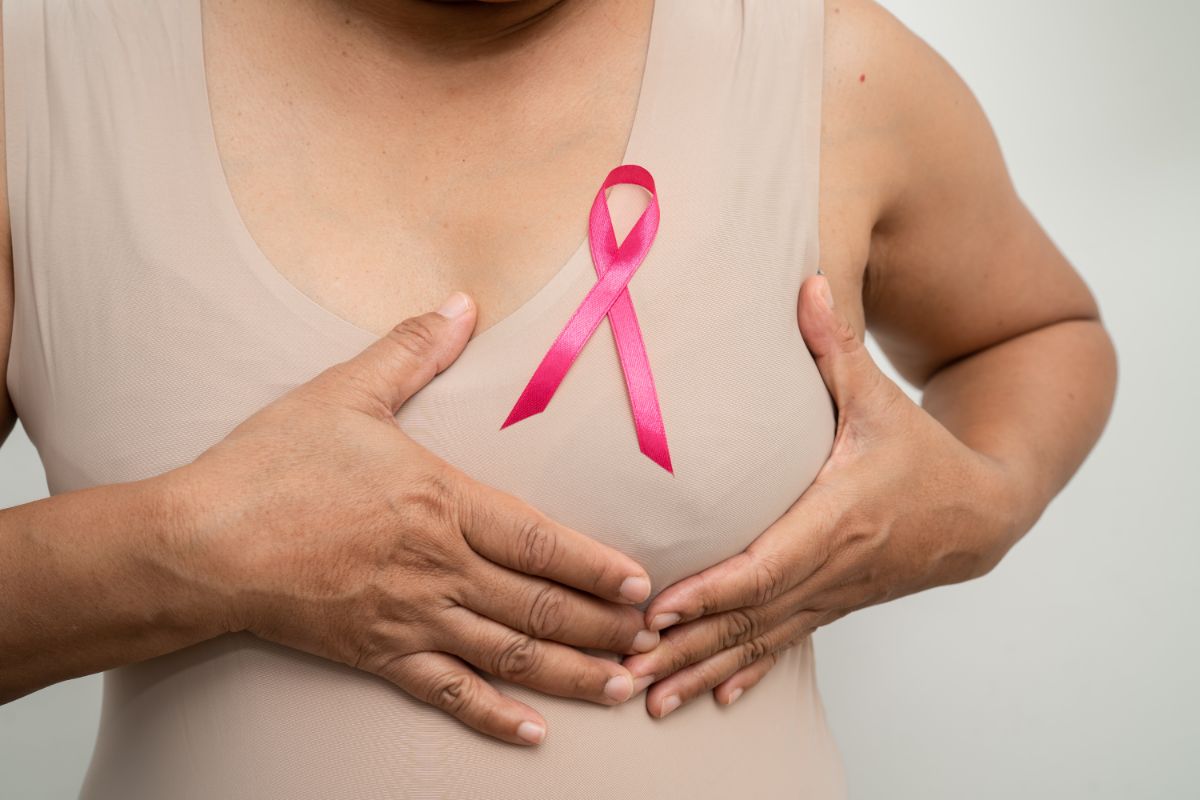
What are the tests conducted for early breast cancer diagnosis?
- Breast Exam
- Breast Ultrasound
- Mammogram
- Breast Magnetic Resonance Imaging (MRI)
- Biopsy
The early detection of breast cancer is stressed by doctors worldwide. It is the second most diagnosed cancer among women. If found early, more treatment options are available for women, giving them better chances of survival.
There are many tests for early breast cancer diagnosis. These can be done when you detect any early symptoms of the disease like:
- Breast or nipple pain
- Lumps on the breast
- Skin dimpling
- Nipple retraction
- Swollen lymph nodes under the arm or near the collarbone
Breast Exam

Conducting a breast exam is one of the best ways to find symptoms of breast cancer early. Through this, you can feel lumps around your breast. You can conduct this on your own or with a doctor.
It’s advised that females undergo a clinical breast exam every one to three years. This applies to those 25 to 39 years of age. If you’re older, it’s recommended that a breast exam be done every year as well as a mammogram every one to two years.
During a clinical breast exam, a doctor can tell you whether your breasts look and feel healthy. They check for any lumps, and other kinds of problems. If they do feel a lump or anything abnormal in your breast, they recommend tests to be done. This is one of the best ways to screen for early breast cancer. When detected early, it is more treatable.
An abnormality in your breast does not always result in cancer. It may be cysts or infections that cause the lumps. However, this exam is still necessary for alerting your doctor of potential problems, and will help them provide proper treatment.
Breast Ultrasound
A breast ultrasound is just like other types of ultrasounds. During this test, technicians make use of sound waves to produce images deep within the body. Breast ultrasounds can detect whether the lump in your breast is a fluid-filled cyst or a solid mass.
When a lump in the breast is fluid-filled, it’s unlikely to be cancer. However, lumps that are solid masses will need to undergo further testing to determine if it’s cancerous.
For women with dense breast tissues, it can be difficult to detect abnormalities in their breasts. An ultrasound helps with this by getting a better look at abnormal areas detected during other tests like a mammogram.
An ultrasound is also helpful when conducting a breast biopsy. The test helps guide the biopsy needle to the targeted area. This gives the technician more accuracy in getting the cells that need to be taken out and tested for cancer.
Mammogram
A mammogram is a low-dose x-ray specifically for the breasts. This can detect breast cancer at its earliest stages, making the results for treatment more likely to be successful.
During a mammogram, women are asked to stand in front of a special x-ray machine. There is a plastic plate where your breast will be placed. Above it, another plate pressed down on your breast. The machine then takes images from various angles.
When breast cancer is detected early through a mammogram, treatments for breast cancers are less likely to be aggressive. There are fewer chances for women to undergo an entire mastectomy and even chemotherapy when detected early.
Breast Magnetic Resonance Imaging (MRI)
Magnetic resonance imaging (MRI) can be conducted on various parts of your body including the breasts. It is a noninvasive test that makes use of a powerful magnetic field and radio waves to produce detailed pictures of the area being scanned.
A breast MRI can be used to screen for breast cancer. Women who have a high risk of breast cancer are usually recommended to undergo this along with a mammogram. An MRI is best conducted along with a mammogram to give doctors a complete image of the breast. This can detect some things that a mammogram doesn’t.
For those with detected symptoms, doctors usually ask for an MRI to be conducted when other imaging tests don’t give clear results.
Biopsy
During a breast biopsy, a small piece of tissue is removed from your breast. This is done using a special biopsy needle. Sometimes, it can also be removed through surgery. Once the tissue is extracted, it is sent to the lab for testing. The tests can tell you if cancer cells are present.
Different kinds of biopsies can be conducted depending on the kind of lump found.
Types of biopsies
-
Fine Needle Aspiration Biopsy
This type of biopsy is conducted to see if the lump found in your breast is either a cyst or a solid lump. A very thin needle is used during the procedure. It is placed into the lump to get a small sample of either tissue or fluid.
-
Core Needle Biopsy
During this biopsy, a large needle is used. It is guided into the lump to remove cores, small cylinders of tissue, without needing to cut the patient’s breast.
-
Open Biopsy
This is a surgical procedure where a cut is made in the breast. This is done when the lump is small and hard to find. A surgeon removes the lump. They sometimes use a method called wire localization. They make use of a thin wire and x-ray images to guide the surgeon in finding the lump.
Key Takeaway
There are many tests for early breast cancer diagnosis. When detected at its earliest stages, this cancer can be treated more successfully without using invasive methods.
PERPETUAL HELP MEDICAL CENTER-LAS PINAS’ Women’s Healthcare Center and Diagnostic Center are equipped with many of these tests for early detection.
The Women’s Healthcare and Diagnostic Center has a 3D Mammography and Digital Breast Tomosynthesis which offers an advanced form of breast imaging or mammography that uses a low-dose X-ray system and computer reconstructions to create three-dimensional images of the breasts.
This machine helps in the early detection and diagnosis of breast diseases in women. Affordable packages for this diagnostic procedure are available.
You can book an appointment for a mammogram and a breast ultrasound.
Early detection is key to curing breast cancer, so don’t hesitate to book an appointment with us today.